This week, in a quiet sales gallery on the Bodrum peninsula, I stood over a coastline that does not exist yet.
It was rendered in miniature: hills of moss, a lagoon of backlit resin, hundreds of tiny villas glowing at dusk, yachts the size of a thumbnail resting in a bay that is still, in the real world, being surveyed. The summers of 2027 and 2028 are already here. They are just very small.
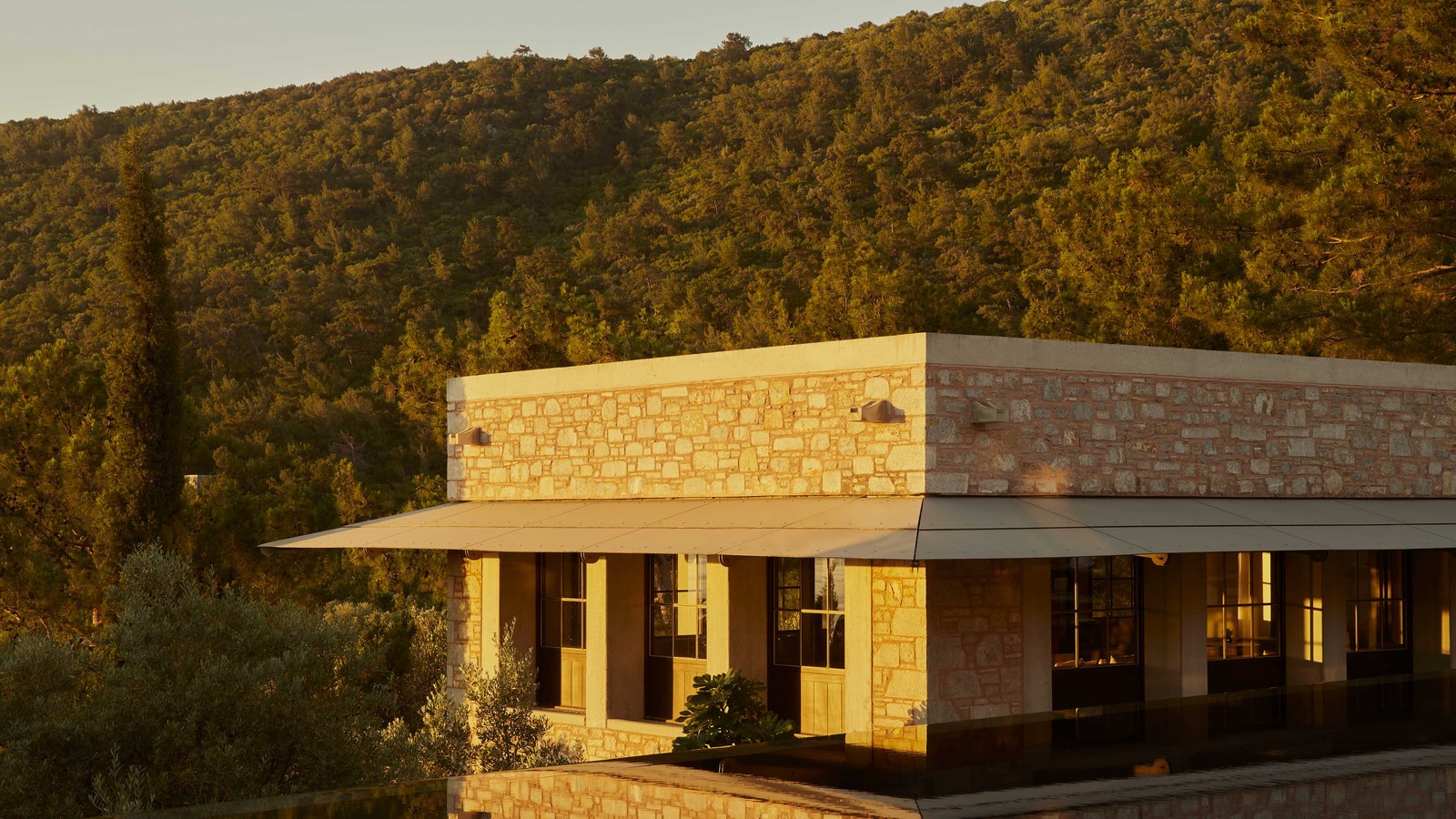
The names attached to these miniatures are not small at all. Aman is adding residences beside Amanruya — the waterfront, lagoon and forest villas drawn by SAOTA, the Cape Town practice whose houses read like carved landscape, with Jean-Michel Gathy shaping the resort itself. Bvlgari’s mansions are on their way toward a 2027 opening. CAJA by Maxx Royal has already taken its place with Han Tümertekin’s signature — one of the few Turkish architects whose name alone changes how a building is read. Kaplankaya is laying out its next neighbourhoods in phases, a decade-long composition rather than a single season’s project.
Something has shifted, and the scale models make it visible. These are not holiday houses with better finishes. They are authored objects. They have architects the way paintings have painters, and they will be discussed, photographed and inherited the way art is. A house on this coast used to be judged by its view. The next generation will be judged by its author, its material honesty, its restraint — and, quietly, by how well it is kept.
Which is the question nobody asks in a sales gallery, and the one I found myself unable to put down.

Art is not merely owned; it is conserved. No serious collector hangs a canvas and leaves the building unheated for eight months. Museums do not close for winter — their quietest months are when conservation actually happens: the checking, the climate, the documentation, the small repairs made before they become restorations. A painting with a negligent custodian is not a masterpiece; it is a liability with provenance.
Now look back at the model. Those tiny lit villas are, in the flesh, works of timber, stone, brass and glass standing in salt air on a seismic coastline — occupied twelve weeks a year, exposed fifty-two. The brands arriving with them understand this; a managed residence comes with its operating layer built in, and that layer does not fly home in September. But the branded villas are a minority. Around them, the same architects’ private commissions, the same owners’ second and third houses, will multiply — each one a work of art, most of them without a conservator.
And there is a pattern to what happens next, because other coastlines have already traced it. Where authored houses gather, the art world follows — the great galleries opened alpine outposts once the chalets had filled with collections, and the auction houses follow the yachts south every summer because that is where the walls are. Bodrum’s walls are filling too. I write this a few steps from a canvas that would not look out of place in a Mayfair viewing room; and anyone who has walked into the club house at Kaplankaya has already met the KAWS figure standing there, cheerfully far from home. So a second question trails the first: who will bring the artworks, the galleries, the auction weeks to this coast — and how long will that KAWS remain alone?
So here is the question the peninsula will have to answer before those model summers become real ones: does Bodrum yet have a category for this — twelve-month residence governance, documented and local, that treats a house the way a museum treats its collection? Or will the knowledge that keeps these houses alive commute from Istanbul on Friday flights, arriving after the humidity, after the storm, after the fact?
Because a work of art with a caretaker who visits occasionally is not being kept. It is being watched while it fades. The houses now rising on this coast deserve the other thing — the quiet, continuous, unglamorous discipline that lets a masterpiece stay one. That discipline is a profession. On this peninsula, it is still a young one. It is the one we practise.
— Standart Consultancy provides owner-side operating discipline for exceptional private residences in Türkiye and the Eastern Mediterranean.
Prefer to speak first? Book a discovery call →