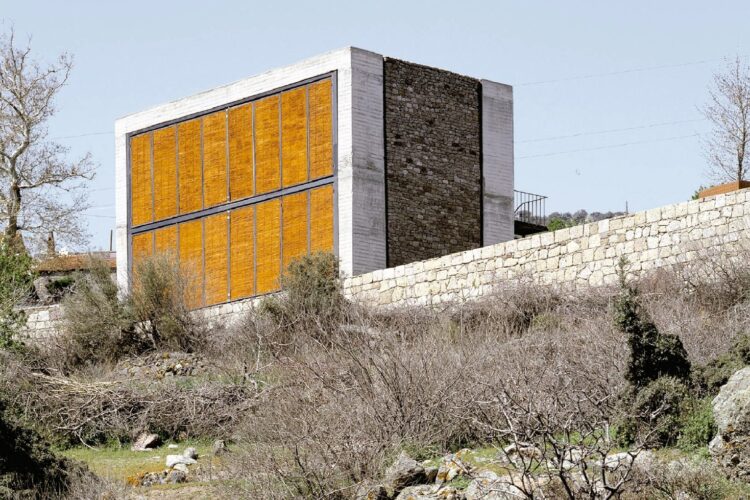
A standard carried from high-occupancy private facilities into private residences.
In private facilities where many people live and work under one roof, the building never rests. In athlete and artist facilities, or private campuses where scientists live together, dozens of showers run at the same time and water and air move through the building all day. Inspections of such places tend to show the same picture: most problems do not come from a bad building. They appear in buildings that are well designed, well built and structurally sound.
Design is the beginning, not the guarantee
A well-designed system is a balance: water temperature and circulation, airflow, humidity, pressure between rooms. The designer sets that balance once. After that, every small decision touches it. A door propped open for convenience, a diffuser turned to fix one cold room, a storage area placed in front of a return vent. None of these looks serious on its own. Together, they slowly pull the system away from the condition it was designed to hold. Temperature, humidity and air movement that differ from one area to the next are the most common result.
The aircraft that came back
Judging a house by the aircraft that returned
In the Second World War, the mathematician Abraham Wald worked on aircraft damage data at Columbia University’s Statistical Research Group. He had records only for the aircraft that made it home. His starting point was that the hits on returning aircraft do not show where the fatal hits fall, because the aircraft that took them never returned. The missing data was the real data.
Buildings invite the same mistake. What we see is the aircraft that came back: the room that was complained about, the unit that broke, the fault that was caught. The aircraft that did not return is the point nobody sees: the unit that is no longer serviced, the outlet that is never flushed, the filter with no record. A residence with no visible problems may simply be one whose problems have not surfaced yet. A good house is recognised not by the absence of complaints, but by what is found when someone looks where nobody looks. That is what a 360-degree inspection and an independent review are for.
Water and air are the quiet risks
In any space with heavy water use, water and ventilation safety decide whether a building is merely comfortable or actually safe. Occupants can see neither. Both depend on routines carried out the same way every day, on measurement, and on people who understand why the routine matters. Without measurement and records, it cannot be shown that the risks are under control. Where that understanding fades, the building is already drifting, long before anything fails.
Recurring colds and Legionella
When the same colds, coughs and throat complaints keep returning among people who share a building, ventilation is a reasonable first place to look: air exchange, filter service, humidity. It is not always the cause, but it belongs on the checklist.
Water deserves the same attention. Legionella can develop where water is warm and still: outlets that are rarely used, dead-end pipes, shower heads with scale. It is managed with ordinary routines, such as temperature records, regular flushing of unused points, shower head cleaning and a named person who checks them. A building can look spotless and still need this discipline.
What goes missing is focus
There is no need to doubt the intent or capability of the teams. What is usually missing is the structure that supports them: a written standard, a named person responsible, a record that is kept. Daily urgencies replace the full picture, each person looks only at their own corner, and the building is watched in parts, never as a whole. Problems are not solved for good; they are managed with measures that save the day. The building is sound, but it is unowned.
Two practices that work
First, a 360-degree inspection. Technical rooms, back-of-house areas, water points, air handling, storage, staff routines, records and the occupant’s experience are covered in the same pass. The aim is to see how the building is actually being used, not how it was meant to be used.
Second, independent review. People who work in a place every day stop seeing it. An outside eye does not need to be harsh, only fresh, and it asks the simple questions that insiders have stopped asking. In any independent assessment, the assessor’s relationship to the people doing the work and the scope of the review are stated clearly.
Most findings are habits, not hardware
When findings are traced back to their source, a large share come from behavior that has become normal: doors and windows left open overnight, checks done “when there is time”, records filled in afterward or never kept, temporary fixes that were never reversed. The building has not failed. A habit has been institutionalized.
This is the encouraging part. Correcting such a finding costs almost nothing. It needs a clear standard, an honest explanation, repeated training and steady follow-up. The real cost is resistance to changing a habit, and that is a matter of ownership and management discipline, not budget. Where the reason behind a standard is understood and it is applied calmly and consistently, the improvement lasts. Work that does need a budget lasts only when it sits on top of that discipline.
Finding a manager is not enough
In a picture like this, the first reflex is usually to look for a new manager. Without a written order, a named responsibility, records and the clear backing of the institution, a new manager arrives at the same point. What is needed is a system, a manager who runs it, and an institution that owns both.
What this means for a private residence
A private residence is a smaller version of the same system. It has the same water, the same air, the same accumulation of small changes, and often fewer people watching. The standard is simple: a residence is inspected as a whole, reviewed from time to time through an assessment with a clearly stated scope, and run by routines that survive changes in staff, vendors and season.
That is the basis of how Standart Consultancy works. The aim is not to add noise or process, but to keep the residence quiet, safe and ready, so that the owner never has to think about any of it.
To know the true condition of your own residence — before the season, before renovation or at handover: Standart Inspection →