An architect-designed home rarely fails first in its structure. It fails first in its intent.
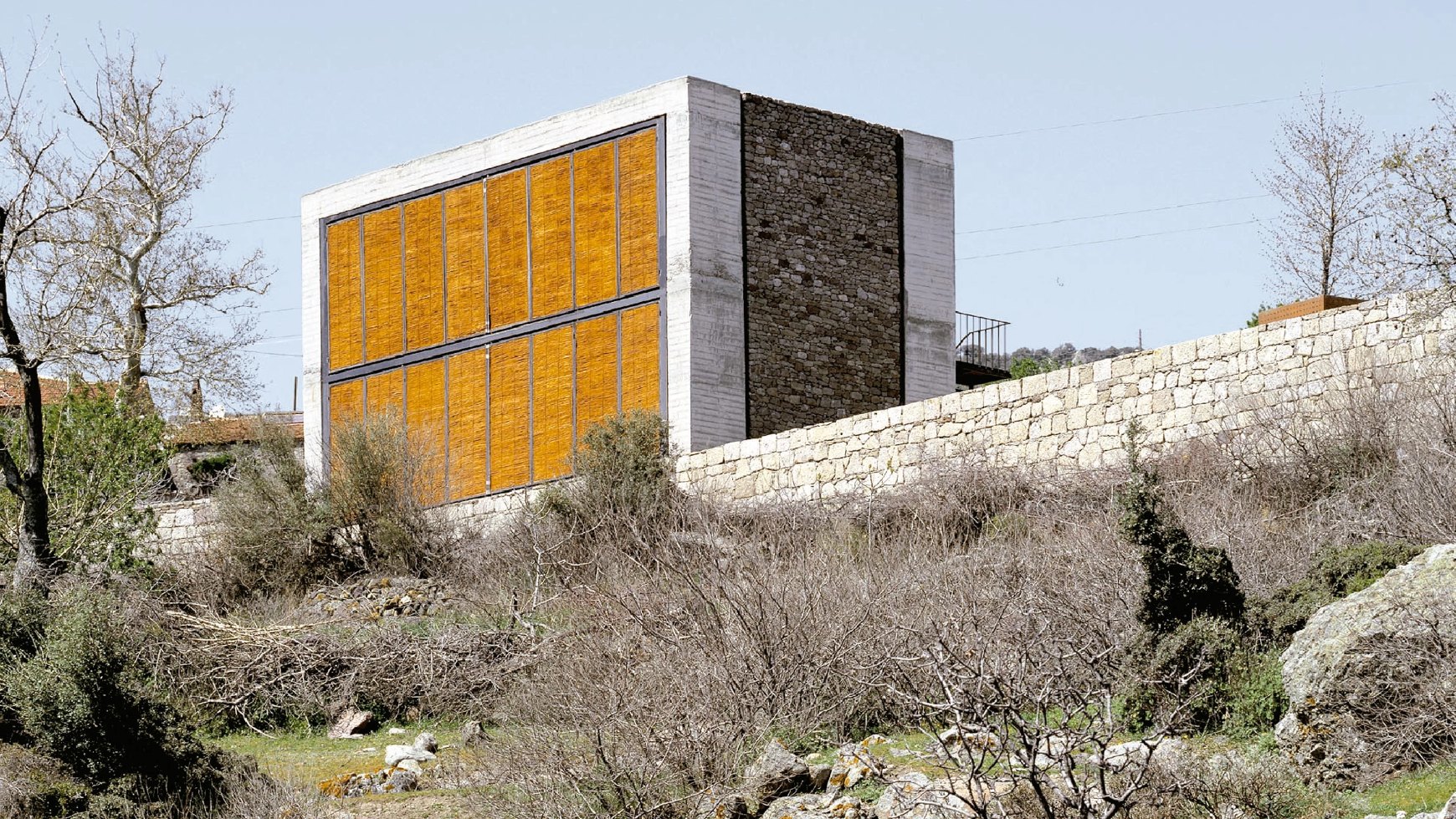
Cover: B2 House, Büyükhüsun, Ayvacık — Han Tümertekin, 2001. Photograph © Cemal Emden. Published with the architect’s permission.
On a slope above the sea in Büyükhüsun, a village near Ayvacık, stands a volume of stone and concrete. Han Tümertekin designed it in 2001 for two brothers. It sits on a retaining wall like a sculpture on a pedestal. The service spaces are folded into a thick north wall, leaving the living space open to the landscape. In 2004 it received the Aga Khan Award for Architecture, cited for its harmony with the landscape and with the history of the place.
Each of those sentences describes a decision. The thickness of the wall is a decision. The quarry the stone came from is a decision. Keeping the service out of sight is a decision. Taken together, these decisions are what make a work of architecture more than a building.
The question is simple: once the architect leaves on handover day, who carries those decisions forward?
Handover day
Picture a house where every detail has been considered: which wall the light reaches at which hour, why a joint was left at that width, why a handle was chosen at that weight. Handover is the architect’s last formal visit.
The next morning the house belongs to other hands: a caretaker, a pool technician, three contractors and a WhatsApp group. All of them mean well. None of them knows why the decisions were made.
Buildings do not age first. Intent does.
Over the past two decades, a great many architect-designed homes have been built along the Aegean coast, from Ayvalık and Urla to Bodrum. Most of their owners spend much of the year elsewhere.
In these homes the structure is rarely what fails first. What fails first is the design intent.
A lamp is replaced with whatever colour temperature is at hand, and the evening light in the living room is never quite the same again. A broken handle cannot be matched, so the nearest substitute goes on. A stone joint the architect left open to let the wall breathe is sealed with the first silicone available when a damp patch appears. The moisture now stays inside the stone.
None of these is a serious mistake on its own. But after three years the house has become a translation of the one the architect handed over, and not a good one.
Maintenance is not stewardship
Maintenance keeps the building alive. Filters are changed, pumps run, the roof holds.
Keeping the work alive is a different task. It requires knowing that a repair can be technically correct and architecturally wrong. It means solving the damp while protecting the texture of the stone, and fixing the lighting while protecting what the light was meant to do.
If that distinction is not written down, by the second year no one is holding the architect’s detailed decisions. They are not lost because they were forgotten. They are lost because no one owns them.
The memory of a residence
The real manual for a house is rarely written anywhere. Which stone, from which quarry, with which finish. Who installed it. Which detail must not be touched, and why. How each material behaves in each season.
That knowledge usually sits in two places: in the architect’s head and in a scattered email chain. Neither is accessible to the house on site. This is why a house needs to be written down long before anything goes wrong.
So when problems accumulate, the owner calls the architect. The architect recognises the problem and knows its cause, but has no hands, no team and no time on site. The calls continue, the issues pile up, the relationship tires, and the work slowly becomes something else.
When the architect stayed
On Mandalya Bay, north of Bodrum, Demir Holiday Village was designed by Turgut Cansever, Emine and Mehmet Öğün and Feyza Cansever. It was completed in 1987 and received the Aga Khan Award in 1992. Each of its thirty-five houses, built in local stone and wood, took a different form and massing. Protecting the trees, the soil and the shoreline was part of the design.
One further detail matters here. Cansever was not only the architect. He acquired the land, developed the project and carried out its execution. Design intent and delivery stayed in the same hands.
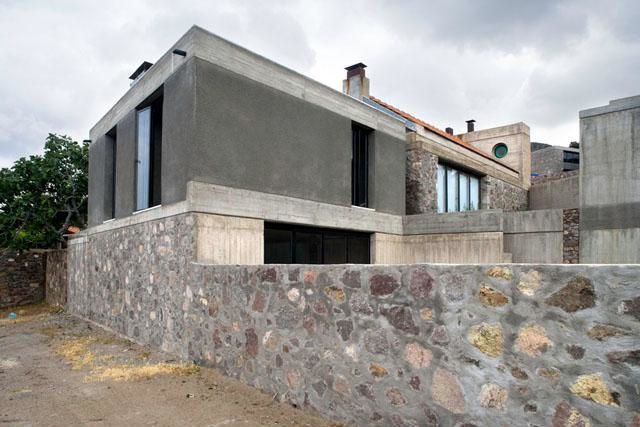
In Yahşibey, a village next to Dikili, the stone houses Nevzat Sayın designed from 1999 onwards reached the same point by another route. He began with a single house, and others followed. Their local-stone façades revived the village’s own way of building. An architect returning to the same place, again and again, changed the character of a village.
Both cases show the same thing: a work survives when someone who understands it stays close to it.
In most homes, though, the architect cannot stay, and should not be expected to. The architect’s work is the next building.
The gap
Today the owner and the architect are standing at the same gap, each asking the other for help.
Owners are no longer asking only who will design the house. They are asking who will run it. Architects can see their work drifting by the third year, and know they have no means to prevent it. The owner calls the architect; the architect has no one on site to call.
What is missing is not a person but a layer: an operating layer that knows the architect’s intent, can make decisions on site, and makes each repair consistent with the design. Not a replacement for the architect, but the architect’s extension on site.
With that layer in place, the damp is solved and the stone is kept. The lighting is repaired and the evening light stays the same. The architect is called only when a design decision is needed. And the owner knows that the person who designed the house and the person who keeps it alive are on the same side.
Handover is a beginning
A work of architecture deserves a counterpart on the operating side. That counterpart is not a facility manager. It is a form of stewardship that reads the house as a composition and makes every repair within it. As we have written before, the handover is where operations begin.
Handover is not the end of the work. It is the beginning of its operation.
For owners and architects who want a completed house to stay as it was designed — on-site inspection, repair coordination and owner representation in line with the architect’s intent: Owner Representation →