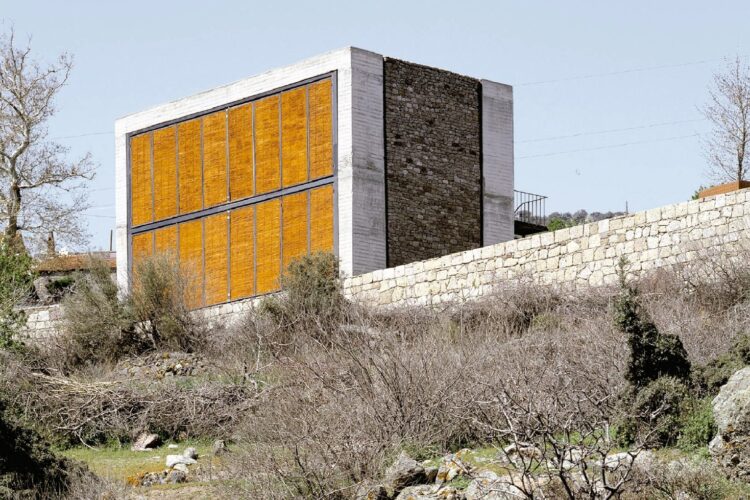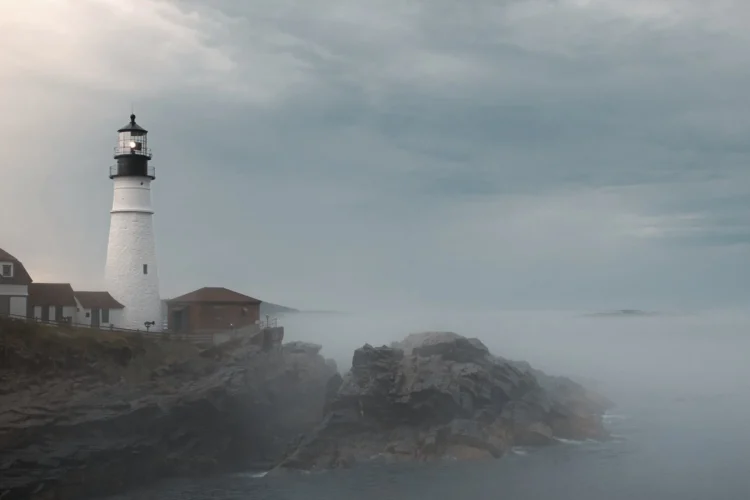
On the Aegean, the maintenance calendar is not written by the owner. It is written by the climate — and a coastal home is, whether anyone admits it or not, a long negotiation with salt, sun and damp.
Stand on any terrace on this coast in July and the climate seems like the whole point: the dry heat, the glitter on the water, the light that makes even ordinary walls look deliberate. It is easy to forget, in that light, that the same climate is the most persistent adversary the house has. Not dramatically — there are no hurricanes here, no freezes that burst pipes overnight. The Aegean works slowly. Salt, ultraviolet, winter damp and the daily swing between hot afternoons and cool nights: four patient forces, each of them invisible on any given day, all of them decisive over five years.
Salt is the quickest of the four. Carried on the sea air, it settles on everything and starts to work on anything metallic: hinges, railings, fixings, pool ladders, the hidden fasteners that hold pergolas and shutters together, the fins of the air-conditioning condensers that were expensive precisely because they were on the sea side of the house. Stainless steel turns out to be a relative term. The corrosion never announces itself; it proceeds quietly under paint and inside joints until, one July, a hinge seizes, a railing stains the stone below it rust-orange, and a compressor that should have lasted twelve summers retires after seven.
The sun does the slower damage. Ultraviolet light bleaches and embrittles: teak silvers and splits, fabrics fade in a season, sealants around windows and terraces lose their elasticity and begin, invisibly, to let water in. That is the quiet partnership at the heart of coastal decay — the sun opens the door, and the winter damp walks through it. Rain finds the hairline crack the summer made, sits inside stone and render through the cold months, and pushes paint off walls from behind. By spring the wall is blistered, and the repainting that was cosmetic two years ago is now remedial.
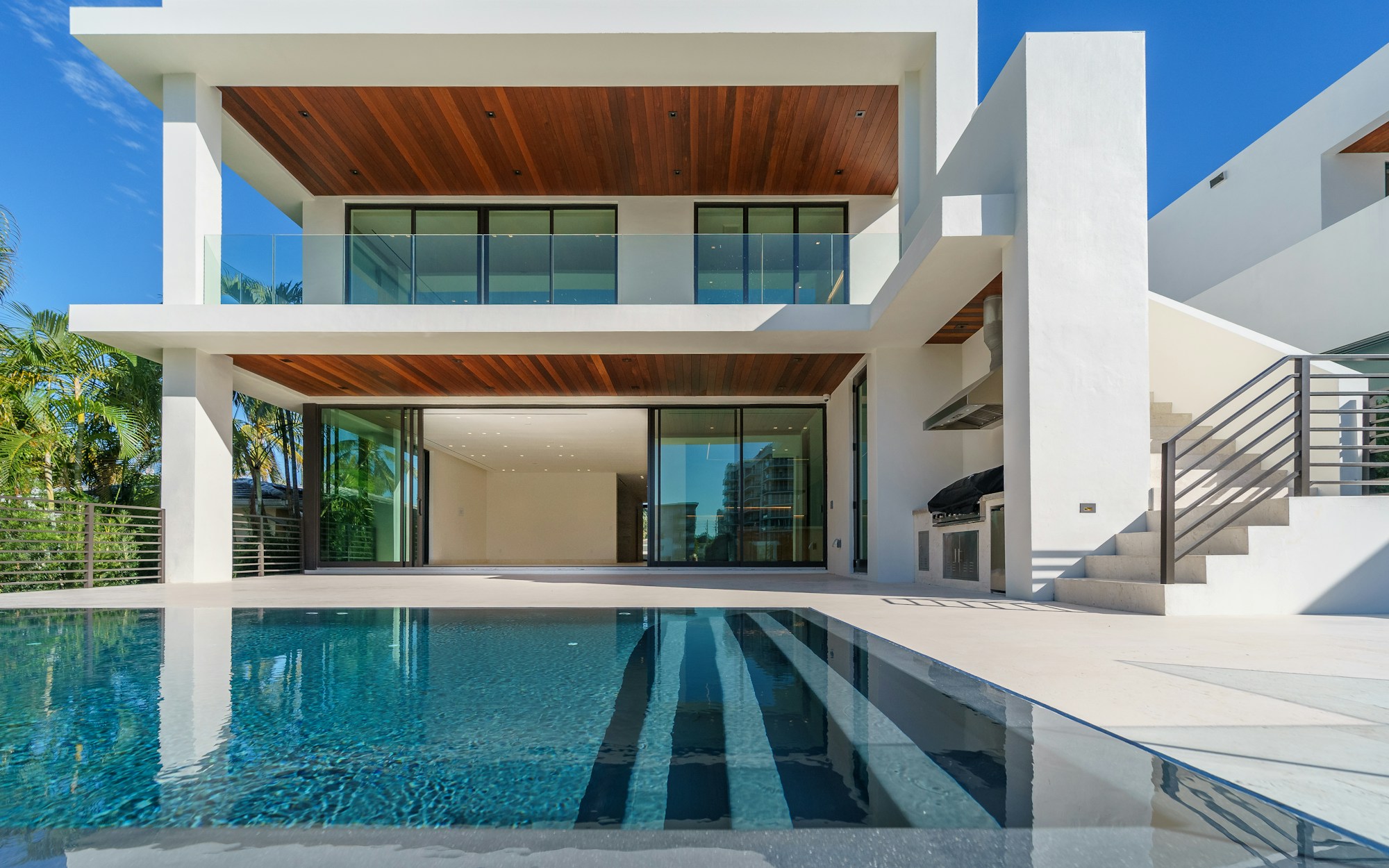
None of this is a reason for alarm; it is a reason for a calendar. The error most coastal homes make is to treat material care as a matter of appearance — repaint when it looks tired, revarnish when the wood looks grey, replace when something breaks. But by the time the eye is offended, the material is usually already lost, and the bill has moved up a category. The economics of the coast are unforgiving in one direction and generous in the other: a house that waits for visible damage pays for restoration; a house that works to the climate’s schedule pays only for care. Rinsing salt from metal before it pits. Renewing sealant before it fails, not after the stain appears. Oiling the teak before it opens. Repainting the exposed façade on its own cycle — the sea-facing side more often than the sheltered one, because the climate does not distribute its attention evenly and neither should the maintenance plan.
This is also, quietly, a matter of knowledge that must belong to the house. Which render held and which didn’t. Which ironmongery survived its third winter and which was replaced twice. Which paint system, which supplier, which side of the building fails first. A coastal home that records its own material history stops repeating its expensive experiments; every failure becomes a specification for the next repair. Homes that keep no such memory buy the same lesson again every few years, from a new contractor, at a new price.
The houses that age well on this coast are not the ones spared by the weather — no house is spared. They are the ones whose care runs on the climate’s rhythm instead of the owner’s noticing. Their metal is dull with rinsing rather than bright with replacement; their wood is oiled before it asks; their walls are painted a season before they need it. To a summer guest they simply look effortless, which is the point. On the Aegean, effortless is not a style. It is a schedule, kept.
Prefer to speak first? Book a discovery call →
An independent view of these systems in your own residence — before the season, after it closes, or at handover: Standart Inspection →